
Quick answer: Most collection complaints are process failures: out-of-hours contact, too many attempts, wrong-party disclosure, inconsistent balances, aggressive language, and missing prior notices. Reduce them with system controls — calling windows, email-first ladders, OTP-verified phones, versioned scripts, live CRM balances, and human escalation for disputes — not only agent workshops.
This nibblet rolls up our compliance cluster. Pillar: AI voice collections Malaysia.
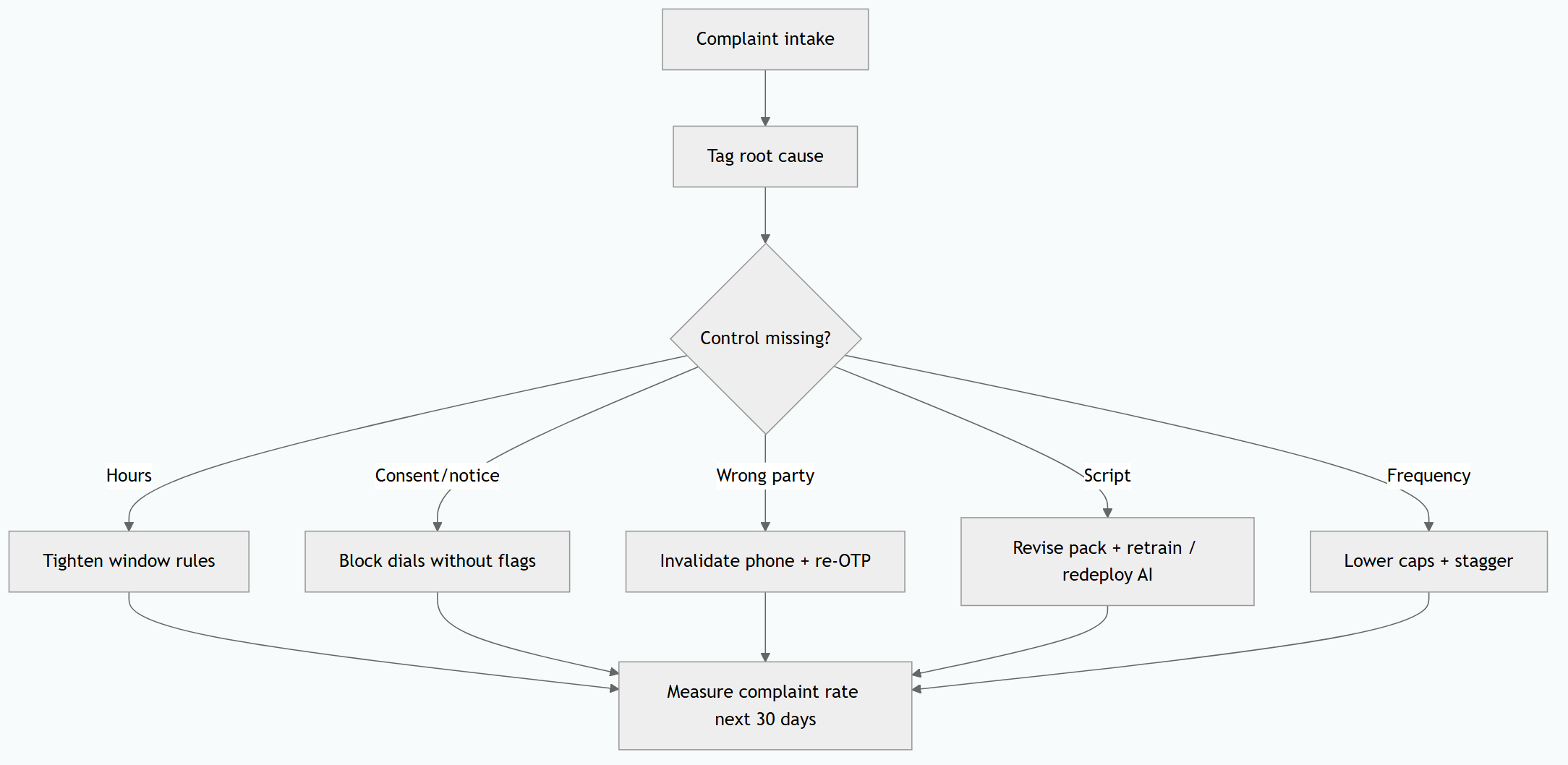
Complaint drivers → controls
| Complaint pattern | Control |
|---|---|
| Late-night / early-morning calls | Enforce calling hours in dialer |
| “Nobody told me” | Email/SMS notice before voice |
| Called family / wrong person | OTP verify + RPC |
| Threatened legal action falsely | Script whitelist + QA on transcripts |
| Wrong amount quoted | Live LMS/CRM balance sync |
| Harassment by frequency | Attempt caps per day/week + cool-offs |
| Surprise AI / recording | Clear T&C + consent |
Metrics that predict complaints
- % attempts blocked for hours / consent
- Wrong-party rate
- Dispute escalation rate
- Attempts per account per 7 days
- Complaint rate per 1,000 contacts
Why AI helps when governed
AI is not “safer” by magic. It is safer when rules are code: hours, consent, OTP, scripts, and audit trails. See BNM guidelines & AI and cost vs agency for the commercial case for consistent early-stage coverage.
FAQ
What’s the fastest complaint reduction lever?
Usually system-enforced hours + attempt caps + wrong-party invalidation. They cut volume of painful contacts without rewriting every script.
Should we stop calling and only use email?
Email-first is smart; voice still recovers when notices are ignored. Sequence channels — don’t abandon voice entirely.
Where do borrowers escalate?
Depending on product and license, paths can include the lender’s complaint unit, AKPK, and relevant ombudsman / regulator channels. Make your internal complaint SLA real.
Playbooks: Delinquency journey · P2P scripts