

Quick answer: Human collection agencies in Malaysia usually price on per-agent retainers and/or commission on recoveries — which scales with seats or recovered value. AI voice platforms like Suarify typically price on usage (per call / per minute / tiered volume), so early-stage reminder volume often lands at a lower cost per successful contact, while humans stay reserved for late-stage negotiation.
If you run P2P lending, consumer credit, or recoveries ops, this is the pricing conversation buyers ask for — without invented vanity numbers.
Table of contents
- How human agencies price
- How AI voice platforms price
- Side-by-side comparison
- Hidden costs to ask about
- FAQ
1. How human agencies price
Common Malaysian outsourcing models:
- Per-agent monthly retainer — you pay for seats even when lists are thin; minimums are common
- Commission on recovered amount — looks low-risk, gets expensive on strong recovery months
- Hybrid retainer + commission — base seats plus success fee
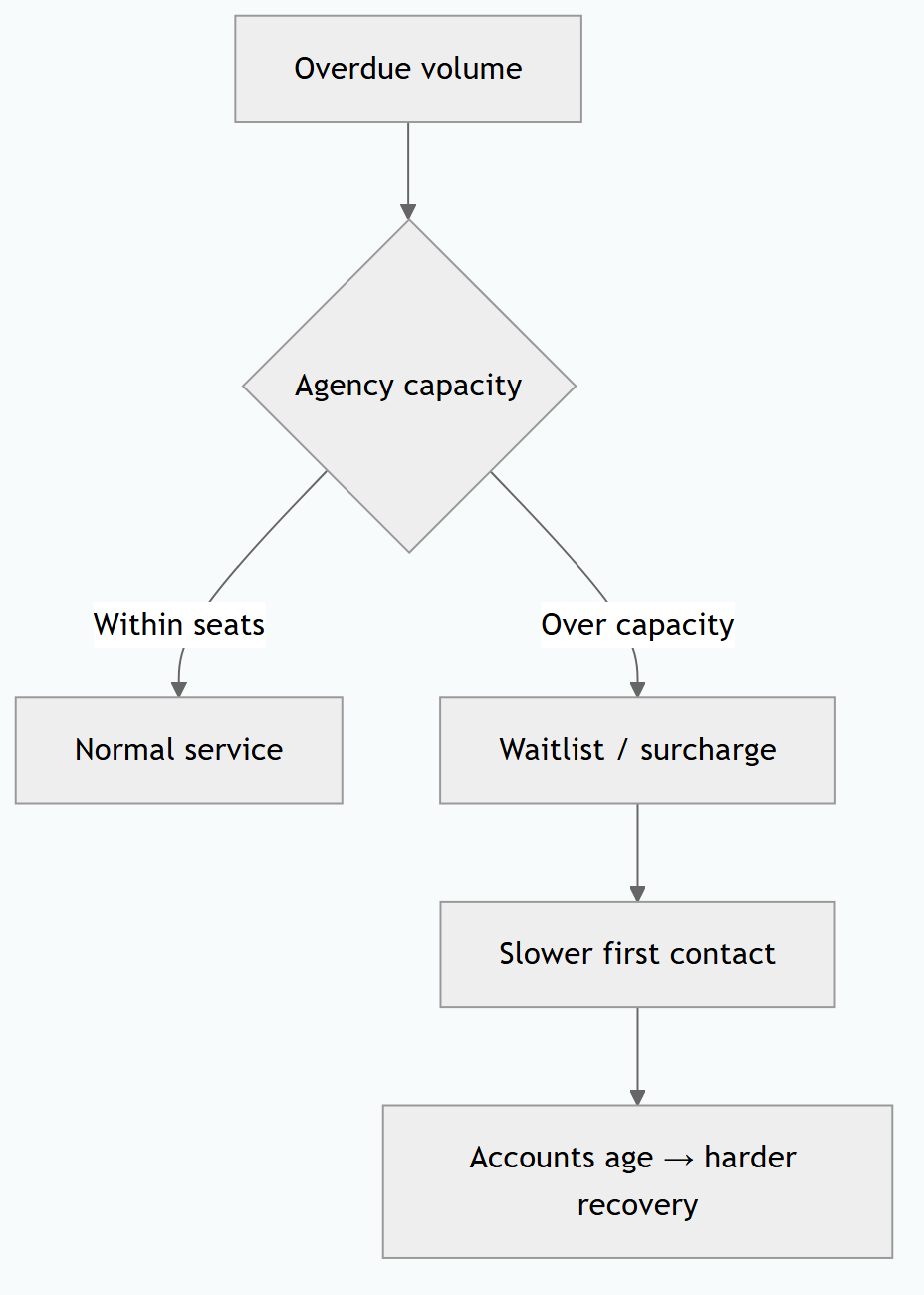
Structural issue: capacity is tied to hiring and contracts. When overdue volume spikes after a rough quarter, you wait for seats or pay surge pricing — while accounts age.
2. How AI voice platforms price
Typical AI commercial shapes:
- Per-call or per-minute usage — pay for dials/talk time, not idle seats
- Tiered volume plans — unit cost drops as monthly volume rises
- Platform fee + usage — integration/subscription plus call costs
Structural advantage: a spike in Day 1–30 reminders does not require a recruitment cycle. Script packs and modes (reminder → interactive → P2P) can deploy the same day.

3. Side-by-side comparison
| Factor | Human agency | AI voice agent |
|---|---|---|
| Pricing model | Seats / commission | Usage / tiers |
| Low volume | High (minimum seats) | Pay only for calls |
| High volume | Linear with headcount | Unit cost often falls |
| Ramp for new campaign | Weeks | Hours–days |
| Multilingual cost | Extra hiring | Product capability |
| After-hours / weekends | Overtime / policy | Controlled by compliance windows |
| Best fit | Late negotiation | Early high-volume reminders |
Practical takeaway: most mid-sized books should not pick “only AI” or “only agency.” Highest ROI is usually AI for Day 1–60 volume + humans for Day 60+ / hardship / dispute.
Pillar context: AI voice collections Malaysia guide
Operating design: Delinquency call journey · Bucket P2P scripts
4. Hidden costs to ask about
- Minimum contract terms (6–12 months) regardless of volume
- Language surcharges for Mandarin / Tamil seats
- Compliance retraining every time agency staff turns over
- Quality drift from agent churn that never shows as a line item
- AI integration fees — confirm LMS/CRM writeback and whether script changes are self-serve
Compliance cost is also real: hour violations, missing consent, and wrong-party contact create complaint load. See BNM guidelines & AI and reduce complaints.
FAQ
Is AI voice calling cheaper than a human collection agency in Malaysia?
For high-volume early reminders, usually yes on a cost-per-successful-contact basis, because pricing follows usage. For complex late negotiation, humans remain the better spend per account — so blended models win.
Do AI platforms charge extra for Bahasa, Mandarin, or Tamil?
Malaysia-focused platforms like Suarify typically treat multilingual as core product capability rather than a per-language seat surcharge.
How fast can AI scale if overdue volume jumps?
Often same day for capacity; the gating items are approved scripts, consent fields, and CRM connectivity — not hiring.
What’s a realistic monthly cost for a mid-sized book?
It depends on attempt volume, talk time, and languages. Use your own dial attempts × expected connect rate × unit price, then compare to current seat/commission spend. Soft claims without your book’s numbers are marketing, not budgeting.
Also read: Pillar guide · BNM & AI compliance