
Quick answer: You can build an AI receptionist yourself: SIP/phone number + speech-to-text + LLM + text-to-speech + a booking/CRM API + escalation rules. US platforms (Bland, Vapi, Retell, Twilio + OpenAI, Dialpad Ai, etc.) make the glue easier — but you still own latency, accents, PDPA, and 24/7 ops. Malaysian SMEs who want local voices, local latency, flowchart-style agent design, and local support usually ship faster on Suarify than on a DIY or US-only stack.
This is the build guide. Honest about DIY. Clear about when to stop building and start answering calls.
Table of contents
- What an AI receptionist must do
- DIY architecture
- US / global vendors people copy
- Build steps (practical)
- Where DIY breaks for Malaysian SMEs
- Suarify as the localized shortcut
- FAQ
1. What an AI receptionist must do
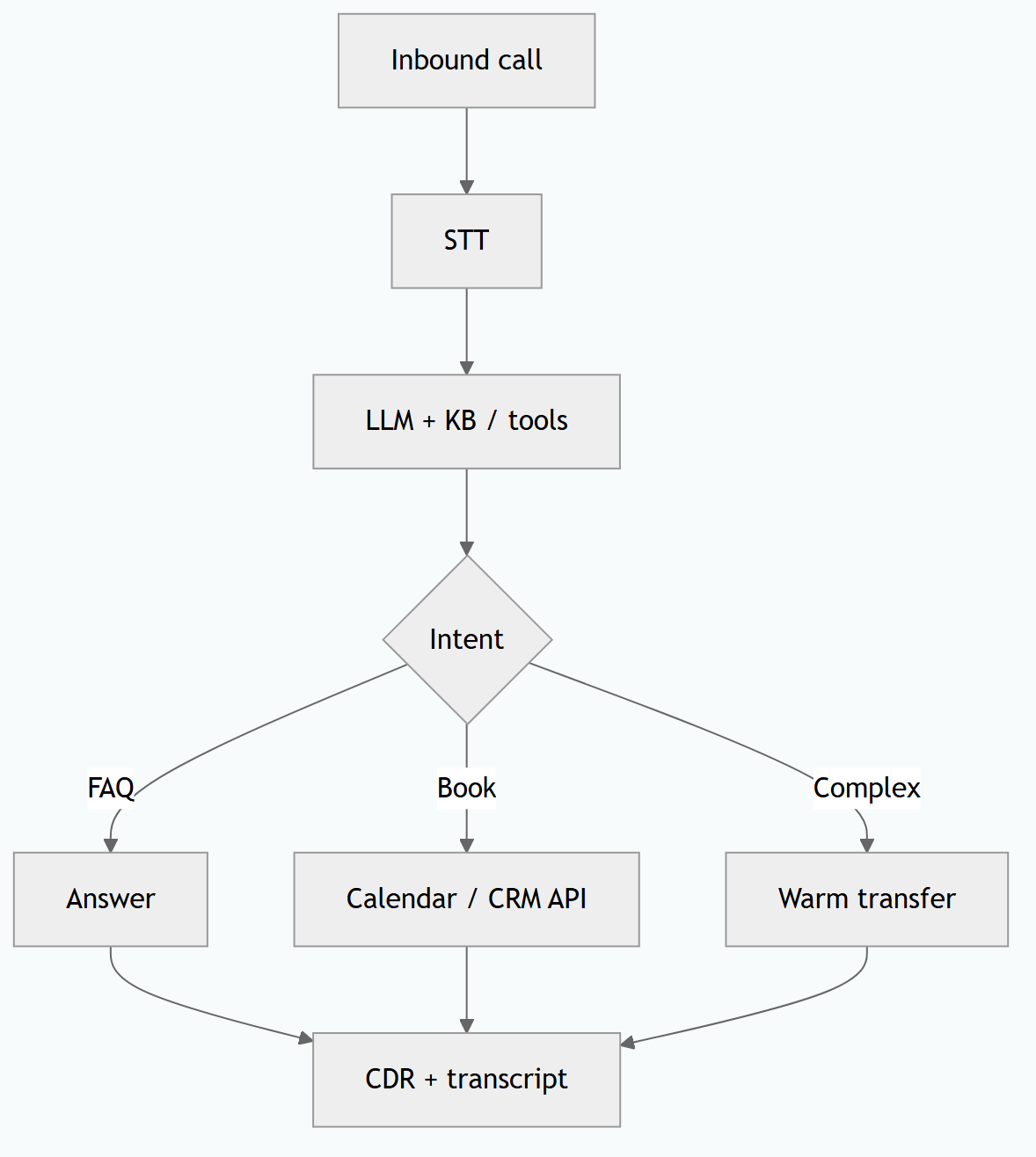
Minimum viable inbound:
- Greet in the caller’s language
- Answer FAQ from a knowledge base
- Capture name / phone / intent
- Book or update a ticket
- Transfer to a human with context
- Log everything
Related SME pain: AI vs human receptionist.
2. DIY architecture
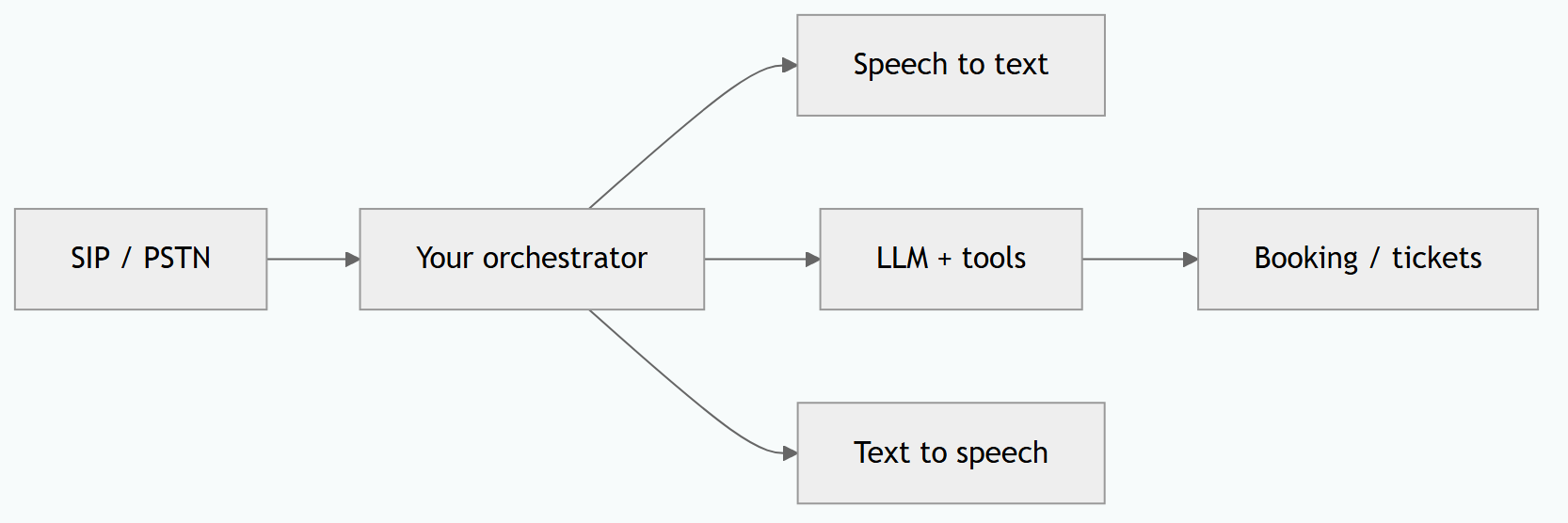
| Layer | DIY choices |
|---|---|
| Telephony | SIP trunk, Twilio, telco DID |
| STT | Whisper / Deepgram / vendor ASR |
| Brain | GPT / Claude + tool calling |
| TTS | ElevenLabs / Cartesia / vendor voices |
| Orchestration | Custom Node/Python or Vapi-style agent |
| Data | Calendar, HubSpot, Google Sheets, WhatsApp |
3. US / global vendors people copy
Common references when Malaysian founders “just copy a US stack”:
| Vendor (examples) | Strength | Watch-outs in MY |
|---|---|---|
| Twilio + OpenAI | Flexible building blocks | Latency + DIY glue + ops |
| Vapi / Retell / Bland | Fast agent prototypes | Voices/accents, local support, MY compliance story |
| Dialpad / RingCentral AI | Office suite bundling | Pricing & localization |
| Amazon Connect + Lex | Enterprise scale | Heavy for SMEs |
Useful to study. Not always cheapest or lowest-latency when callers and infra are in Malaysia.
4. Build steps (practical)
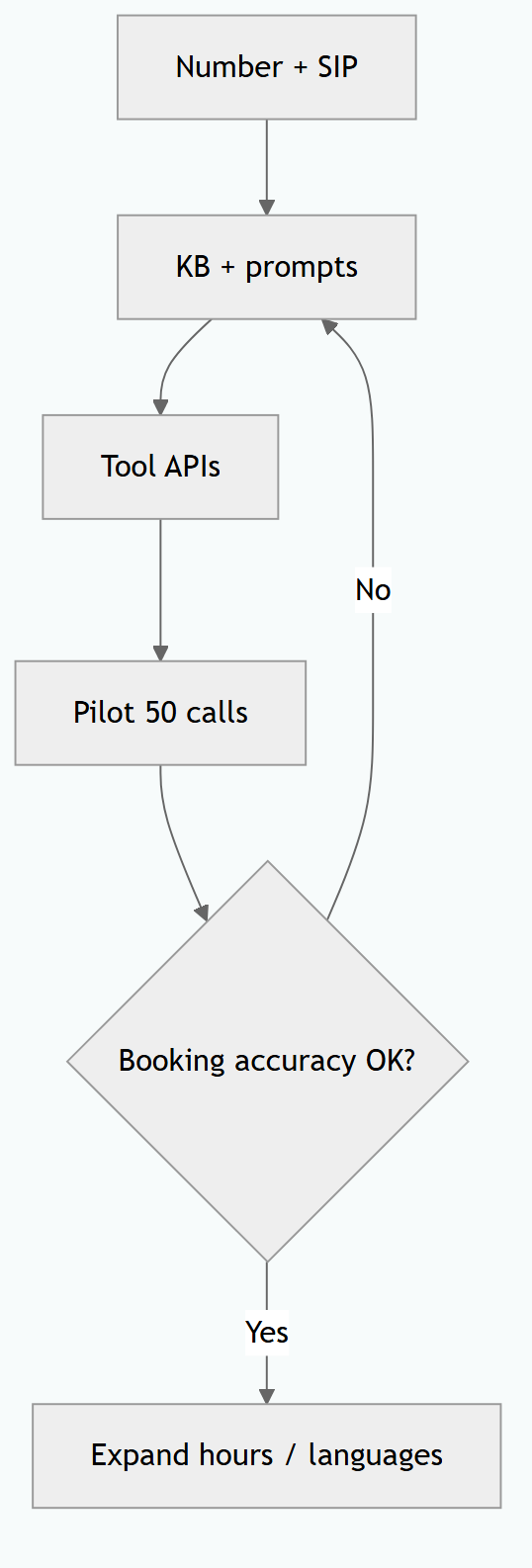
- Buy a number + SIP that can receive MY calls
- Write FAQ KB (hours, pricing bands, location, policies)
- Define tools:
create_booking,get_ticket_status,transfer_human - Prompt + guardrails (no inventing prices)
- Test barge-in, silence, noisy cafés
- Add recording notice + retention policy
- Monitor failed bookings for two weeks
5. Where DIY breaks for Malaysian SMEs
- Latency across US regions feels like awkward pauses
- Manglish / BM / ZH / TA voices need real auditioning
- PDPA + call recording notices are your problem
- Nobody onshore to debug SIP at 10 p.m.
- Founders become unpaid telephony engineers
6. Suarify as the localized shortcut
If the goal is answered calls — not a science project — Suarify is built for Malaysia:
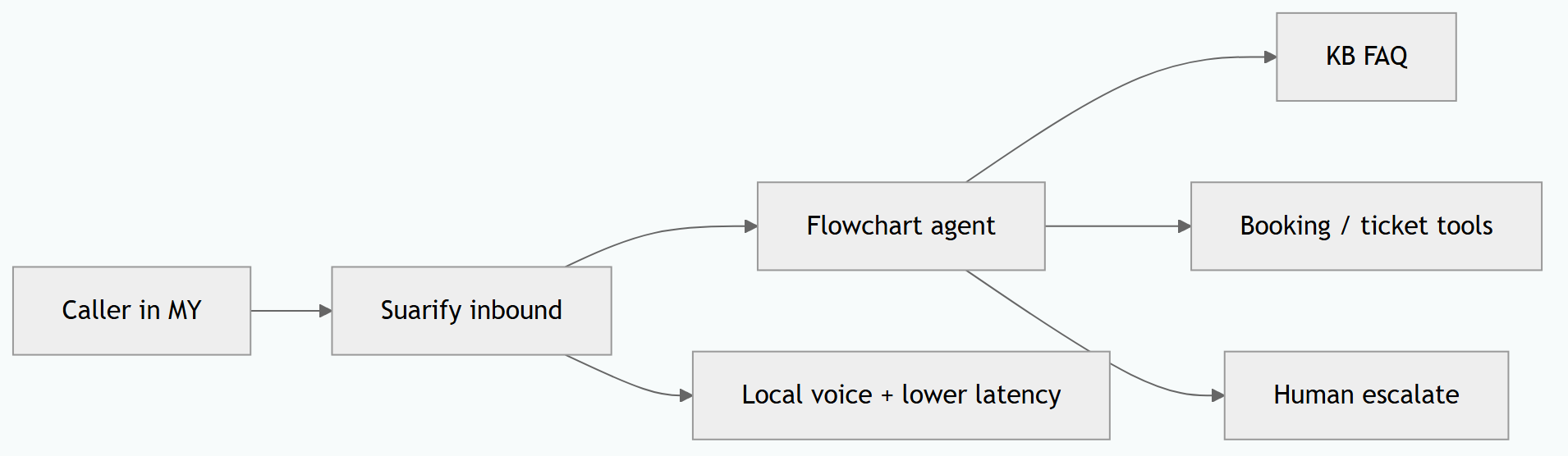
- Flowchart / visual agent designer — map greet → FAQ → book → transfer without a custom orchestrator
- Easy / low-config setup — start from templates, not blank repos
- Localized voices — Malaysianized BM/EN and multilingual paths
- Lower latency — regional hosting oriented to Malaysia / ASEAN
- Compliance mindset for MY — logging, consent-friendly patterns, local operating context
- Malaysia-priced usage vs importing full US SaaS stacks
- Local support — people who understand MY SIP and SME workflows
DIY is great for learning. Suarify is great for shipping a receptionist this month.
FAQ
Can I fully DIY an AI receptionist?
Yes — if you can own SIP, prompts, tools, and on-call debugging.
Are US platforms bad?
No. They are strong prototypes. Measure latency, accents, and support against MY callers before you standardize.
Does Suarify support booking and FAQ?
Yes — knowledge base FAQ, booking capture, ticket-style updates, and human handoff are core inbound paths.